Posts Tagged landscape architecture
Paving Styles | Elements of Landscape Design
Landscaping is an art of planning the drives, walks, lawns, shrubs, gardens, flower-beds etc. so as to form a beautiful setting for a building. The main purpose of landscaping is to create a joyful environment round the building and give the occupants a healthy breath, good appearance and natural beauty.
Landscape Architecture can also be defined as the composition of masses and spaces. There are various Elements of Landscape that help beautify and organize the environment.
In this article, we are going to list the various Landscape Elements and discuss in detail the design of Pavements using different types of materials…
Importance of Landscape Architecture
Posted by BenzuJK in Architecture, Landscape on April 12, 2010

When an architect or a town planner plans, he is in actuality, intervening with ‘living system’. The intervention can be disastrous if insufficient thought is given to the effects of development, especially its long-term consequences on the environment. The blend between man and nature will not be harmonius, but there will be imbalance or contradiction instead. In the long-run the total environment is bound to deteriorate. This is what ecology is all about- the inter-relationship between living and non-living things and their habitat.
Natural Landscape Vs Artificial Environment
Landscape Architecture is the art of designing the environment with the help of natural elements like stones, bricks, water, landforms… etc.

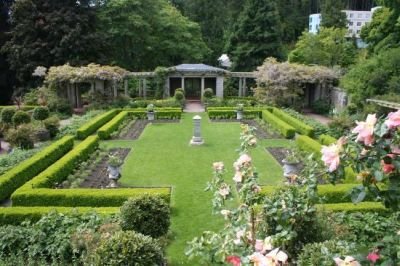
Italian Gardens
If we design a building aesthetically good and also decorate it beautifully from inside, yet if its surrounding outside area is rubbish, then the beauty of the building will be considered reduced. As such the building must have a beautiful surrounding. This is achieved by landscape development.
Landscaping is an art of planning the drives, walks, lawns, shrubs, gardens, flower-beds etc. so as to form a beautiful setting for a building. The main purpose of landscaping is to create a joyful environment round the building and give the occupants a healthy breath, good appearance and natural beauty.
Landscape design enhances the aesthetic appeal of a building. It entails planning the space outside or surrounding a construction or a building.
The job of the landscape designer is to manipulate and shape the natural layout of the site to suit his uses and create aesthetic pleasure. The outdoor environment could be designed with natural or man-made components i.e., it could be natural or artificial.
The importance of Landscape Architecture should not be undermined.
Evolution of Persian Gardening Style | The Paradise Gardens
Persian Garden Style evolved after the Egyptian Style of gardening. It marked the beginning of “Modern Garden Architecture”. The Persian garden was an answer to the aridity of the local climate where the high walled garden and the shady trees with its air cooled by streams and fountains, was a simple recipe for paradise. Mediterranean and hence all Western Gardens have their origins in Egypt between three and four thousand years ago. Since Egypt is a natural desert depending on the Nile for its fertility, its gardens were planted along reservoirs and irrigation canals.
The canals were straight for practical reasons; trees planted followed straight lines along the canals, It was also natural for the canal to have fish, lotus and supply of water. Hence, the theory goes that axial designs and layouts of gardens, the ‘formality’ of all classical Mediterranean inspired gardens to the present – via the Persians whose style swept eastwards to India and westwards via Spain with spread of Islam, and by the Romans whose adaptation of the Egyptian Style was repeated in the Renaissance.
Elements of Garden Design | Water
It is difficult to imagine another element so central and so vital both to basic life and to a diverse range of aesthetic and recreational pleasure. The use of water in the built environment is thousands of years old and is interwoven throughout its long history with symbolism and religious rites as well as with sensual delight. Aqua landscapes or Water Gardens, as they are known, have been prominent in English Imperial Gardens, French Baroque Gardens, Chinese Classical Gardens as well as the Moorish Royal Gardens.

Water Gardens typically include the integration of artificial ponds, streams, waterfalls, statues, rocks, aquatic plants, fishes, watercourses and fountains with the natural surroundings and environment in order to create a pleasing atmosphere.